Flu activity can rise quickly during the coming peak season, increasing the demand for reliable respiratory specimen collection.
Choosing the right swab is an important step in the flu testing workflow. Oropharyngeal flocked swabs and nasopharyngeal flocked swabs offer specimen collection options for different sampling sites, depending on the diagnostic method and assay requirements.
In this guide, we’ll introduce these two types of flocked swabs, explore their key features and applications, and share practical considerations for specimen collection to support reliable flu testing.
Why Choose Flocked Swabs for Flu Testing?
The American Society for Microbiology (ASM) recommends flocked swabs as the preferred specimen collection device for flu testing. In fact, flocked swabs have been hailed by the microbiology and diagnostic communities for their ability to absorb and elute more specimen than traditional spun fiber or foam swabs.
At the microscopic level, the synthetic tip of a flocked swab is brush-like, and has more surface area than cotton and is, therefore, able to collect and elute more material. The brush-like tip of the flocked swab also provides for better specimen collection and release during testing.
Selecting an appropriate swab and following proper collection procedures are essential for obtaining suitable specimens. The choice of swab should always be compatible with the intended diagnostic assay.
Two Flocked Swabs to Consider for Flu Season
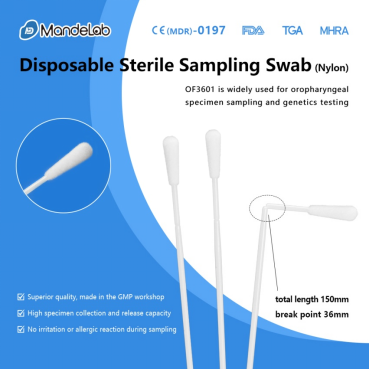
CDC notes that a nasopharyngeal swab is the optimal upper respiratory tract specimen collection method for influenza testing, MandeLab product link: MS-OF3601.
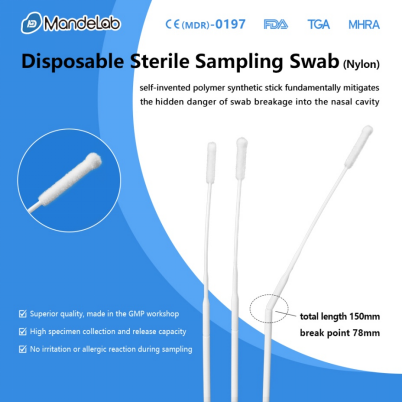
WHO also notes that combined nasal and throat swabs may provide a higher yield of virus detection in influenza-like illness cases than oropharyngeal specimens alone, MandeLab product link: MS-NF7801。